


Journal · Skin Health
SkinPen Microneedling, Explained: What It Fixes and What It Will Not
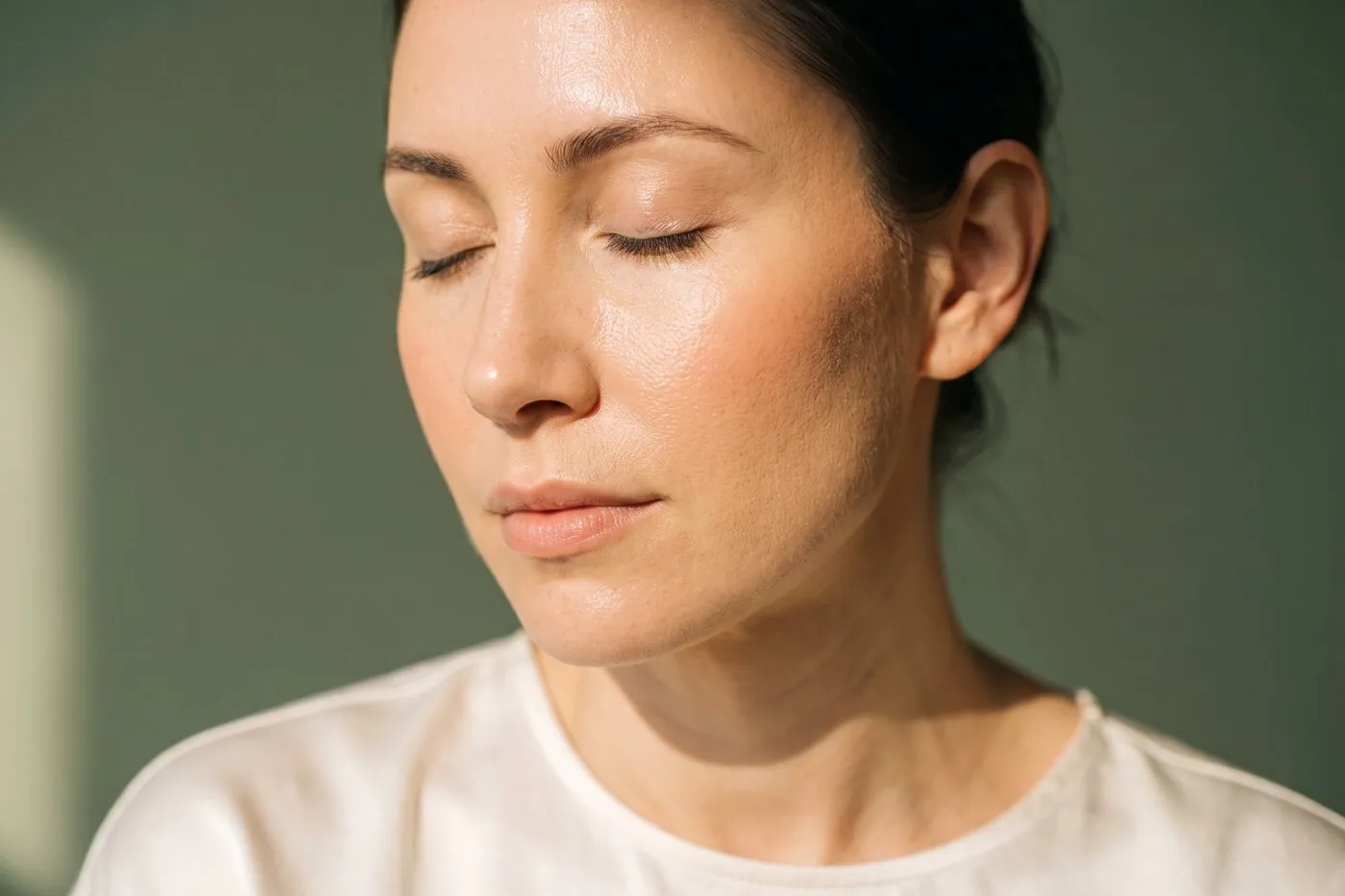
SkinPen is medical microneedling: a sterile tip that creates thousands of tiny controlled channels in the skin so your body repairs them with fresh collagen. It is used for texture, enlarged-looking pores, neck lines and the appearance of acne scarring. It is from £350 a session at our South Kensington clinic and it works as a course of three to six, spaced four to six weeks apart. It does not lift skin, it does not tighten, and one session is not a treatment plan.
Microneedling has a credibility problem, and it is mostly self-inflicted. The word covers a £30 dermaroller bought online, a facial in a salon, and a medical device used at a depth chosen for your particular skin. Those three things share a mechanism and nothing else. This guide is about the third one, how Dr Nina Bal and the team use SkinPen at Facial Sculpting, what it genuinely changes, and the cases where we tell people to spend their money elsewhere.
Key takeaways
- SkinPen was the first microneedling device in the world to be FDA-cleared, which is a manufacturing and safety standard, not a promise of results.
- It treats skin quality: texture, pores, neck lines, the look of scarring. It does not treat laxity.
- A course of three to six sessions, four to six weeks apart, from £350 per session.
- Safe across all skin types including deeper tones, because it uses no heat and no light.
- No makeup and no SPF for the first 48 hours, which is the rule people most often ignore.
- The result is your own collagen, so it arrives at about four weeks, not on the day.
What actually happens to the skin
The tip holds a set of very fine needles that move vertically at high speed while it is glided across the skin. Each pass leaves a column of micro-channels at a depth chosen for the area being treated, shallower around the eyes, deeper on a scarred cheek.
What follows is the interesting part. The skin does not distinguish between a controlled needle channel and any other small wound, so it starts the same repair sequence: it clots, it clears, it rebuilds. The rebuilding stage is where new collagen and elastin are laid down, and it is slow. That is why nothing much appears to happen for a fortnight and then skin looks different at about four weeks.
Two consequences follow from that, and they explain most of the disappointment people report with microneedling anywhere. Results cannot be rushed, because you are waiting on biology rather than on a product settling. And a single session produces a single round of repair, which is real but modest. The course exists because each session builds on the collagen the last one made.
Best for
Texture, enlarged-looking pores, neck lines, the appearance of soft scarring.
Not for
Sagging skin, deep static lines, volume loss, ice-pick scars.
Timeline
Redness for one to three days, visible change from about four weeks.
SkinPen against the alternatives
The question worth asking is not whether microneedling works. It is which of the skin-quality treatments is the right one for the specific thing bothering you, because they are not interchangeable and the prices are not close.
| Treatment | What it is actually for | Downtime | From |
|---|---|---|---|
| SkinPen | Texture, pores, neck lines, the look of scarring. Collagen through mechanical injury alone. | Redness for one to three days | £350 per session |
| RF microneedling | The same texture work plus heat for a tightening effect, so it suits early laxity as well. | Redness for about 24 to 48 hours | £600 full face, £800 with neck |
| Aquagold facial | A superficial micro-infusion carrying a serum blend. Glow before an event, not remodelling. | A few hours of mild redness | £865 per session |
| PRX-T33 peel | Brightening and firming with no needles at all, for people who will not accept downtime. | Light flaking for a few days | £450 per session |
| Profhilo | An injectable skin booster for hydration and firmness. A different problem entirely. | Minimal | See the price list |
Read that table as a set of different questions rather than a ranking. The commonest mistake we see is someone booking a course of microneedling when what has actually changed in their face is support, not surface. If the jawline has softened and the cheeks have dropped, no amount of collagen in the top layers will address it, and the conversation that helps is about sagging skin and lifting rather than about needles.
Why it suits deeper skin tones
This is not a marketing line, it is a mechanism. Most of the pigmentation risk in skin resurfacing comes from heat and light, which is why laser settings have to be chosen so carefully in Fitzpatrick types IV to VI, and why a badly judged session can leave marks that take months to fade. Microneedling introduces neither. The injury is mechanical, the depth is controlled, and the risk profile barely changes with skin tone.
That does not make it automatically appropriate. A history of keloid or hypertrophic scarring is a genuine reason to avoid needling, and that history is more common in some groups than others, so it is asked about specifically rather than assumed away. Active acne, an eczema or rosacea flare in the treatment area, a current cold sore, recent oral isotretinoin and pregnancy all change the answer too.
Acne scarring, and the part most articles skip
Acne scarring is the single most common reason people come to us asking about microneedling, and it is where being specific matters most, because the word covers four quite different things.
| Scar type | What it looks like | How well SkinPen does |
|---|---|---|
| Rolling | Broad, shallow, soft-edged undulations that show up in side light | Best response. This is the scar type microneedling is genuinely good at. |
| Boxcar, shallow | Round or oval depressions with defined edges, not deep | Good over a full course, with the edges softening rather than the scar disappearing. |
| Boxcar, deep | The same shape but with steep walls | Partial. Improvement is real but limited, and expectations need setting before the first session. |
| Ice-pick | Narrow, deep, like a puncture | Poor. Needling passes over the top of them. Another approach is needed. |
| Post-inflammatory pigmentation | Flat brown or red marks with no change in texture | Not a scar at all, and not a microneedling job. It is a pigment question. |
Most people have a mixture, which is why an assessment beats a self-diagnosis in a bathroom mirror. It is also why the first question at a consultation is whether the acne itself is settled. Needling through active, inflamed acne can spread bacteria and worsen the very marks you are trying to treat, so scar work waits until the skin is quiet. We have gone into the detail of what to expect in our longer piece on whether microneedling helps with acne scars, and the wider picture sits on our acne scarring page.
A course of microneedling will change your skin's texture. It will not change its shape. Almost every disappointed patient we meet was sold the first while hoping for the second.
What about the roller in your bathroom cabinet
Home dermarollers and medical microneedling share a principle and almost nothing else, and the difference is worth understanding before you decide a course is expensive.
A roller drags. Its needles enter at an angle, tear sideways as the wheel turns and exit at an angle, which produces a wider, messier wound than a vertical channel and gives you inflammation without the clean stimulus. The needles blunt after a few uses and most people never replace them on schedule. Depth is whatever pressure your hand happened to apply, which around the eyes is a genuinely bad idea. And the device is not sterile after its first use however carefully it is rinsed.
A home roller at 0.25mm is a way of helping products absorb and there is nothing wrong with that. It is not a scar treatment and it will not remodel anything. If you have been rolling at home for a year and seen no change to your texture, that is the expected result rather than a sign you are doing it wrong.
What the appointment is like
Assessment first, and it is not a formality: skin type, the specific concern, medical history, medication, and whether SkinPen is the right device for you at all. Then cleansing and topical numbing, which needs about twenty minutes to work properly.
The needling itself is quick. The tip is passed over the area in overlapping directions at the depth chosen for that region of the face. Most people find the forehead and the bony line of the jaw the sharpest, and the cheeks unremarkable. Afterwards a calming serum goes on and you leave looking flushed, roughly like an afternoon of unplanned sun.
Then the aftercare, which is short and non-negotiable. No makeup and no SPF for 48 hours while the channels close, no gym, no sauna, no swimming, and no direct sun. After two days, back to gentle skincare and daily sun protection. Some people add Target Cool exosomes from £400 on the day to calm the skin and support recovery, which is optional rather than standard.
What happens over the following weeks
| When | What you should see | What is worth a call |
|---|---|---|
| First 24 to 48 hours | Redness and a warm, tight feeling like light sunburn | Increasing pain, spreading redness, or any blistering |
| Days three to five | Redness fading, skin possibly a little dry or flaky | Yellow crusting, or a cold sore appearing |
| Around four weeks | Smoother texture and a more even surface as new collagen arrives | No change at all after a full course |
| Across the course | Session-on-session improvement in texture and scarring | New pigmentation in a treated area |
Who we tell to spend the money elsewhere
Skin quality treatments are easy to sell and that is exactly why it is worth stating who should not have this one.
If the change you have noticed is that your face looks like it is sliding rather than that its surface has roughened, microneedling is the wrong purchase. If your complaint is deep static lines that are there when your face is completely relaxed, collagen in the upper dermis will not remove them. If it is pigmentation with no textural change, that belongs with pigmentation and sun damage treatments rather than with needles. And if you want to look different for something in ten days' time, this treatment is on the wrong timescale entirely, and the Aquagold facial is the better answer to that question even though it costs more.
The people who do well are the ones treating skin quality: rough or uneven texture, pores that look larger than they used to, the crepey horizontal lines on the neck that nothing topical touches, and soft acne scarring in skin that has been calm for a while. That group reliably gets a result worth the course.
What it costs
SkinPen at Facial Sculpting is from £350 per session, with your plan and final price confirmed after a skin assessment rather than quoted from a description over the phone. Because it works as a course, plan around three to six sessions four to six weeks apart, and treat any single-session price you are quoted anywhere as only part of the picture. Everything across the clinic is published on our price list, and the full detail on suitability and aftercare sits on the SkinPen treatment page.
If you are weighing SkinPen against radiofrequency microneedling, that difference is worth an assessment rather than a guess, because £350 spent on the wrong one of those two is £350 that changes nothing you were actually bothered about. The other skin-quality routes sit together on our skin health treatments page, and if what you are really describing is overall skin quality and radiance, start there.
Book a consultation at our South Kensington clinic and we will tell you which of these your skin needs, including when the answer is none of them. You can also message us on WhatsApp.
Common questions
Your questions, answered
-
SkinPen is a medical microneedling device, the first in the world to be FDA-cleared. A sterile single-use tip is glided across the skin and creates thousands of tiny controlled channels. Your body treats those channels as small injuries and repairs them, and that repair process lays down fresh collagen and elastin. The improvement you see weeks later is your own collagen, not anything that was put in.
-
SkinPen is needles alone. Radiofrequency microneedling sends heat energy down through the needles as well, which adds a tightening effect on top of the texture work. If your concern is texture, pores or acne scarring, SkinPen does that job at £350 a session. If skin has started to loosen as well, RF microneedling from £600 is the better spend, and Dr Nina will say which one your skin actually needs.
-
Yes, and this is one of the reasons it is used so widely. SkinPen works by mechanical injury rather than by heat or light, so it does not carry the pigmentation risk that badly chosen laser settings can create in deeper skin. Suitability is still assessed first, because a history of keloid scarring, active acne or certain medications can change the answer regardless of skin tone.
-
Usually a course of three to six, spaced four to six weeks apart, because the gap is what lets collagen actually rebuild between sessions. Texture and pores often respond within three. Acne scarring generally needs the fuller course and sometimes more. One session on its own gives you a fresher-looking few weeks rather than a structural change.
-
Because the micro-channels are still closing, and anything you put on the skin in that window can get into them. That includes sunscreen, which is otherwise something we ask you to wear every day. Stay out of direct sun for those two days instead, then go back to gentle skincare and daily SPF. It is the single aftercare rule people most often break.
-
Numbing cream is applied first, so most people describe a scratching or vibrating sensation rather than pain. The forehead and the area along the jaw tend to be the sharper spots. Afterwards the skin feels warm and tight, like mild sunburn, for a day or two.
-
SkinPen at Facial Sculpting is from £350 per session, confirmed after a skin assessment. Because it works as a course, the figure worth planning around is the course rather than the single session. That is deliberately discussed before anything is booked rather than session by session.
-
For soft rolling scars and shallow boxcar scars, yes, over a course. For ice-pick scars, which are narrow and deep, microneedling alone does relatively little and other approaches suit better. Active acne needs settling before any scar work starts, because needling through inflamed skin can spread it. An assessment sorts which type of scarring you actually have.
Keep reading
Related reading

Will Microneedling Help with Acne Scars?
Understanding Microneedling for Acne Scarring Acne scars can be a persistent concern, affecting skin texture, confidence, and overall appearance. Microneedling is a well-established treatment designed to improve the look
Read more
What Is BBL HEROic? The Sciton Light Treatment Explained
What BBL HEROic actually is, how broadband light clears pigment and redness, how it differs from IPL and laser, and who it does not suit. Dr Nina Bal, London.
Read more
What Is Facial Balancing? A Guide to Harmonising Your Features
What facial balancing actually means, how a proper assessment works, which treatments are used and when each is wrong, explained by Dr Nina Bal in London.
Read more