


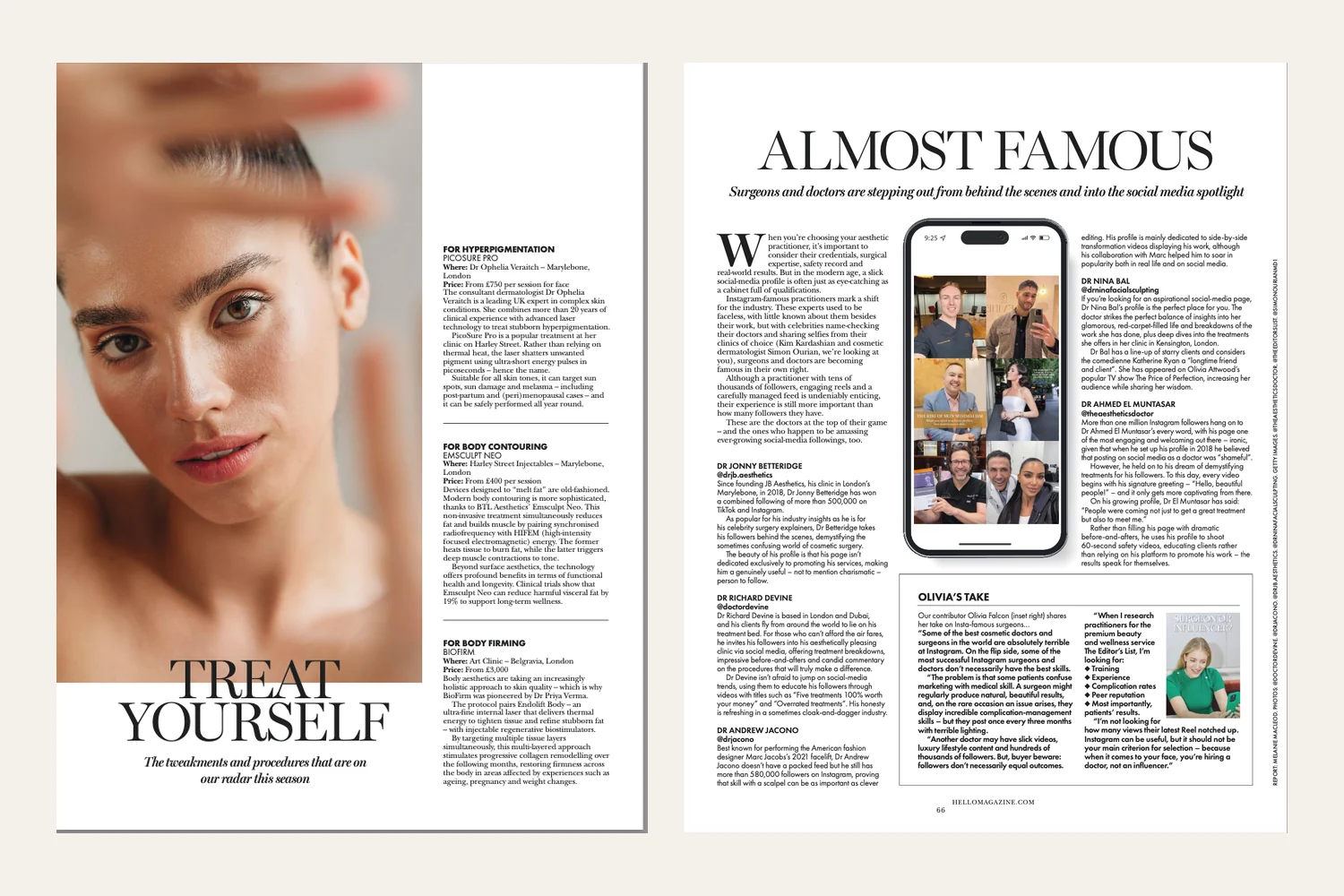
Dr Nina Bal appears four times in the annual HELLO! Aesthetics Guide 2026, a 68 page special on pioneering clinics, innovative treatments and groundbreaking science. Facial Sculpting is named for XERF, Dr Nina is interviewed on what muscle relaxing treatments do and do not do for mood and sleep, she sets out how to check a practitioner before you book, and the clinic appears in the guide's Address Book.
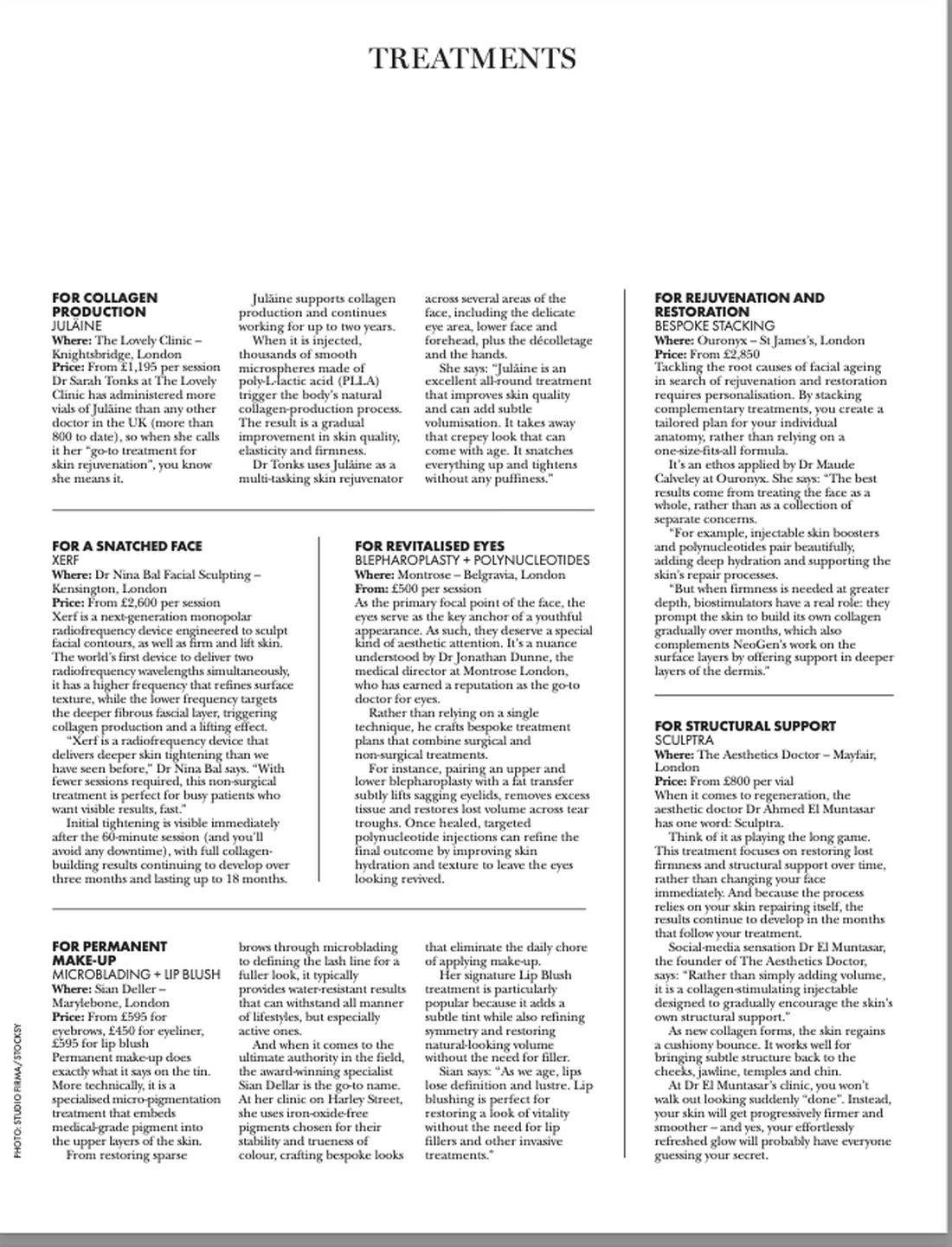
XERF, named by HELLO! for a snatched face
In Treat Yourself, the guide's edit of the tweakments and procedures on its radar this season, XERF is listed under the heading For a snatched face at Dr Nina Bal Facial Sculpting in Kensington, London, from £2,600 per session.
HELLO! describes XERF as a next generation monopolar radiofrequency device engineered to sculpt facial contours as well as firm and lift the skin, the first device to deliver two radiofrequency wavelengths at once: the higher frequency refines surface texture while the lower frequency reaches the deeper fibrous fascial layer, where collagen production is triggered and the lifting effect comes from. Initial tightening is visible immediately after the 60 minute session, with no downtime, and the collagen building result continues to develop over about three months and lasts up to 18 months.
“XERF is a radiofrequency device that delivers deeper skin tightening than we have seen before,” Dr Nina Bal says. “With fewer sessions required, this non surgical treatment is perfect for busy patients who want visible results, fast.”
Read what the treatment involves and who it suits on our XERF page, or see it alongside the clinic's other energy devices in advanced laser and radiofrequency.
Sleep Tight: what muscle relaxing treatments do, and do not do, for mood
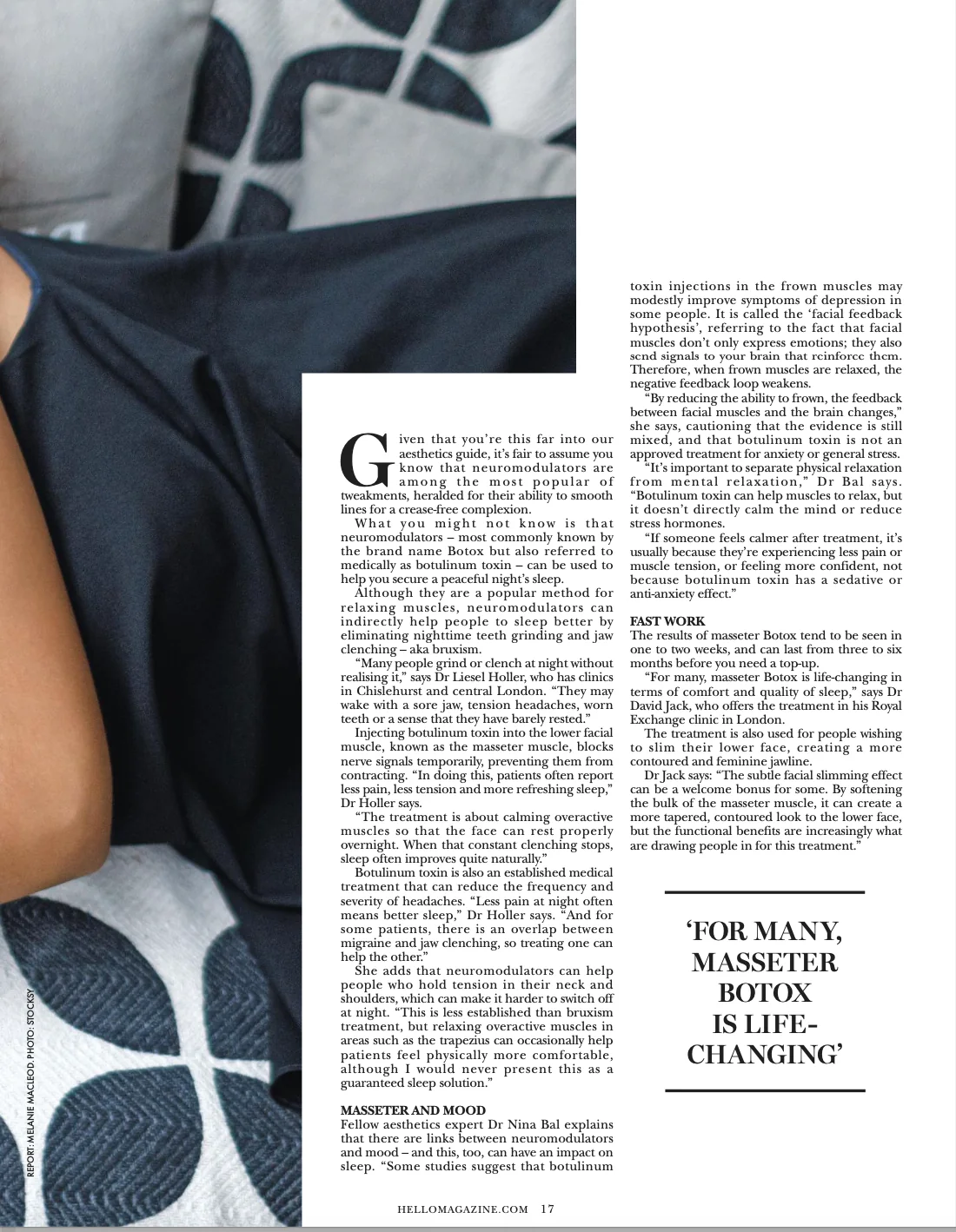
In Sleep Tight, reported by Melanie Macleod, the guide examines whether neuromodulators can help people sleep better, mainly by easing night time clenching and jaw tension. Under the heading Masseter and mood, Dr Nina Bal is asked about the link between these treatments and how people feel.
She explains that some studies suggest injections in the frown muscles may modestly improve symptoms of depression in some people, an idea known as the facial feedback hypothesis, because facial muscles do not only express emotion, they also send signals back to the brain that reinforce it. “By reducing the ability to frown, the feedback between facial muscles and the brain changes,” she says, while cautioning that the evidence is still mixed and that these treatments are not an approved treatment for anxiety or general stress.
“It is important to separate physical relaxation from mental relaxation,” Dr Nina says. Muscles can be helped to relax, but the mind is not directly calmed and stress hormones are not reduced. “If someone feels calmer after treatment, it is usually because they are experiencing less pain or muscle tension, or feeling more confident.”
That restraint is the clinic's own position. Jaw tension and clenching are assessed before anything is recommended, and where treatment is appropriate it is planned as part of the jawline slimming and bruxism approach rather than offered as a remedy for stress or sleep.
Question Time: how to check an aesthetics practitioner before you book
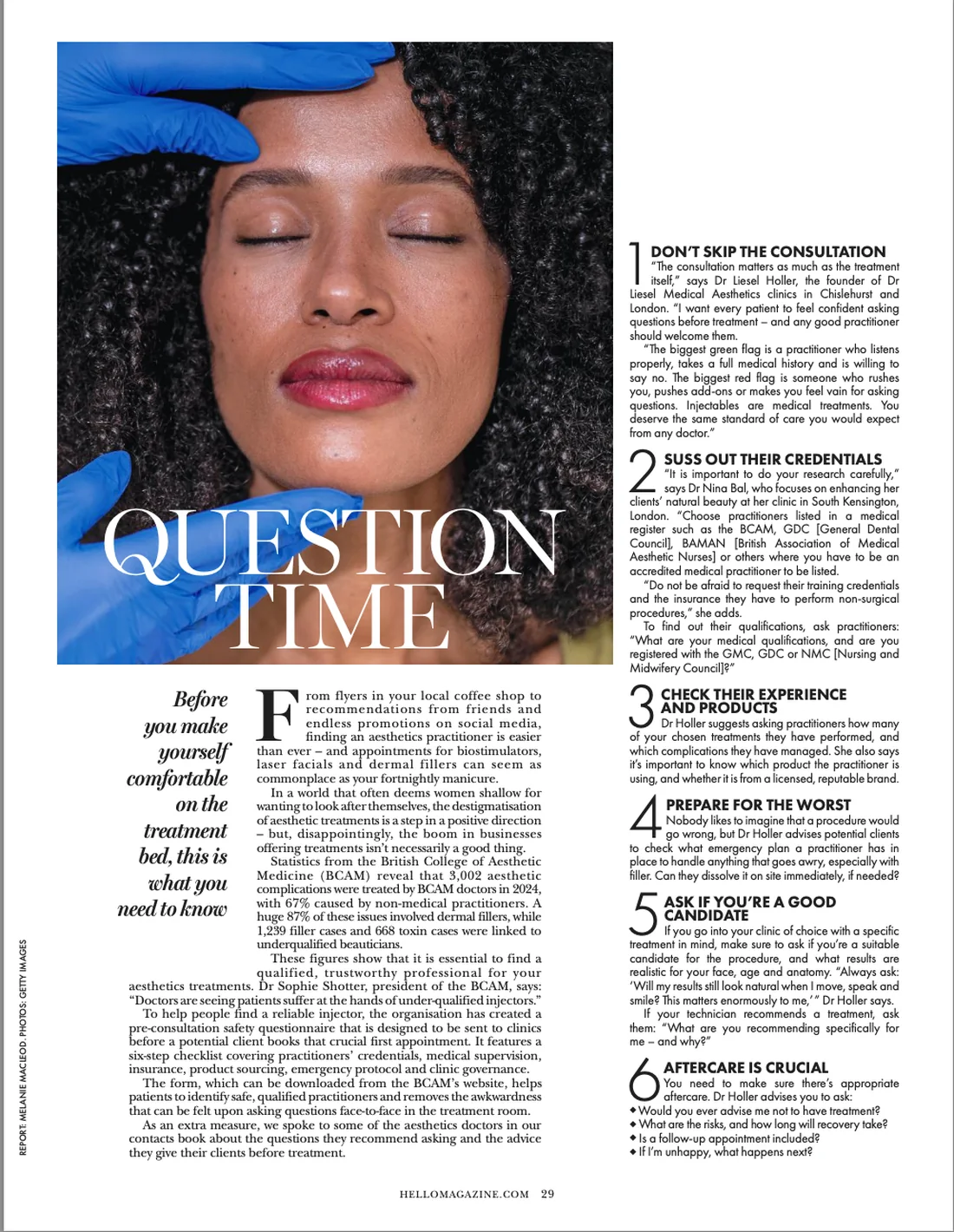
The guide's Question Time feature sets out what to establish before you make yourself comfortable on the treatment bed. It reports figures from the British College of Aesthetic Medicine showing that BCAM doctors treated 3,002 aesthetic complications in 2024, with 67 per cent caused by non medical practitioners, including 1,239 filler cases and 668 toxin cases linked to underqualified beauticians.
Dr Nina Bal is quoted on checking credentials. “It is important to do your research carefully,” she says. “Choose practitioners listed in a medical register such as the BCAM, GDC [General Dental Council], BAMAN [British Association of Medical Aesthetic Nurses] or others where you have to be an accredited medical practitioner to be listed.” She adds: “Do not be afraid to request their training credentials and the insurance they have to perform non surgical procedures.”
Dr Nina is GDC registered and a BCAM member, and the clinic holds Save Face Platinum accreditation and JCCP registration. Her training, registrations and professional memberships are set out in full on her profile, and you can meet the clinical team before you book.
Almost Famous: the practitioners shaping the conversation
In Almost Famous, on surgeons and doctors stepping out from behind the scenes and into the social media spotlight, HELLO! profiles Dr Nina Bal's account at @drninafacialsculpting. The guide writes that “the doctor strikes the perfect balance of insights into her glamorous, red carpet filled life and breakdowns of the work she has done, plus deep dives into the treatments she offers in her clinic in Kensington, London”, notes her line up of starry clients, that she considers the comedienne Katherine Ryan a “longtime friend and client”, and that she has appeared on Olivia Attwood's television show The Price of Perfection.
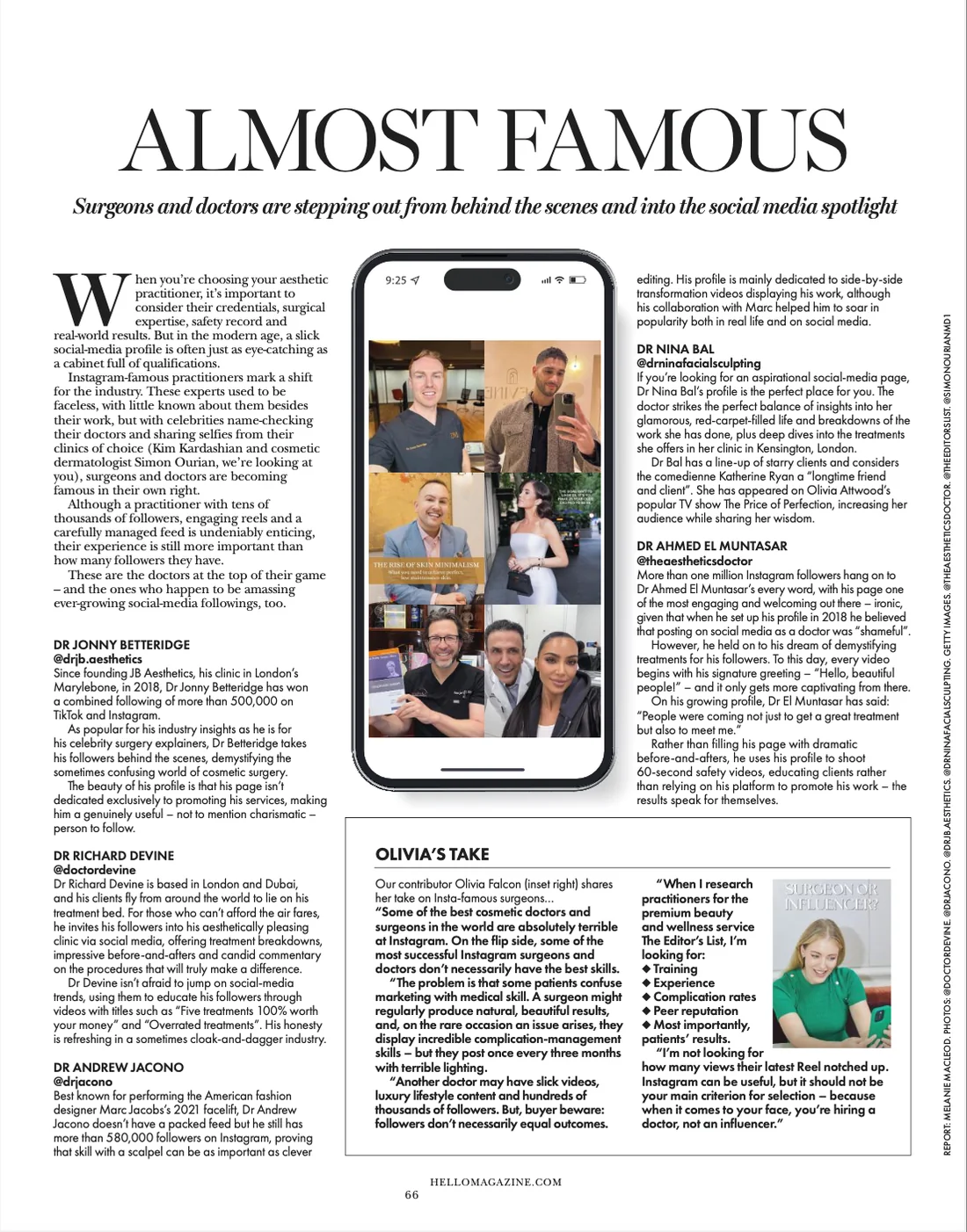
In the HELLO! Address Book
Facial Sculpting is listed in the guide's Address Book, the aesthetic contacts and brands HELLO! tells readers to have on their radar, under Doctors, Surgeons and Clinics: Dr Nina Bal, 313 Brompton Road, London SW3 2DY. XERF appears separately in the same directory under Brands.
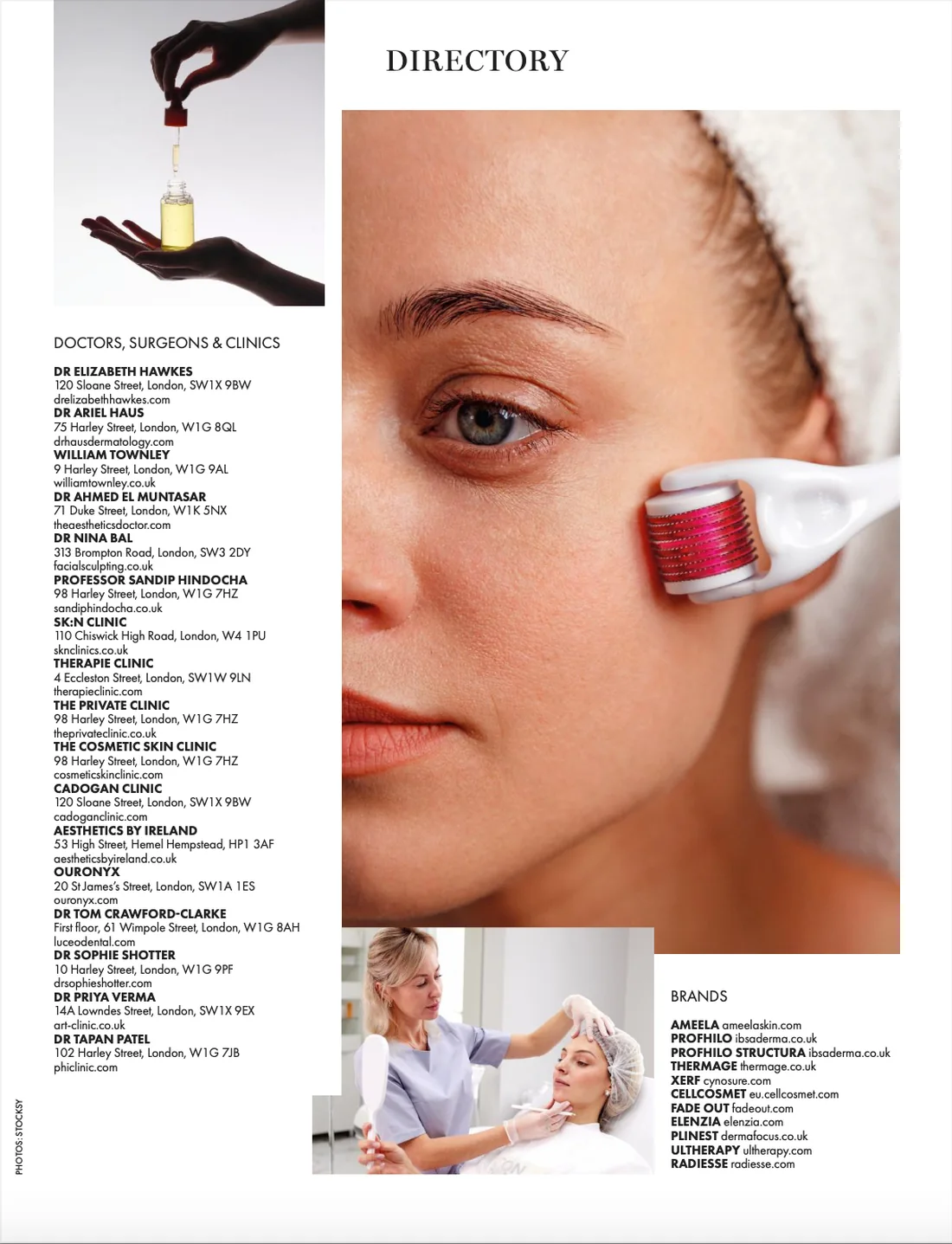
What does the HELLO! Aesthetics Guide 2026 say about XERF at Facial Sculpting?
In its Treat Yourself section, under the heading For a snatched face, the guide names XERF at Dr Nina Bal Facial Sculpting in Kensington, London, from £2,600 per session. It describes XERF as a next generation monopolar radiofrequency device that refines surface texture at a higher frequency while a lower frequency reaches the deeper fibrous fascial layer, with tightening visible immediately after the 60 minute session, collagen building results developing over about three months and lasting up to 18 months.
How does Dr Nina Bal say you should check an aesthetics practitioner?
In the guide's Question Time feature she advises choosing practitioners listed in a medical register such as the BCAM, the GDC or BAMAN, where you have to be an accredited medical practitioner to be listed, and says patients should not be afraid to ask for a practitioner's training credentials and the insurance they hold to perform non surgical procedures.
To talk through whether XERF or another route suits your skin, get in touch with the clinic or book a consultation. More coverage is in The Press Edit.
