
"Dr.Nina is the best thing that happened to my skin! She is so professional and knowledgeable. I have struggled with acne all my life and just after two months of personalised skincare routine it is completely gone. I also got Profhilo, botox and a little filler to even out my face shape - I’m so happy with the natural results! She’s incredible!!"
Treatments · Facial Sculpting
Polynucleotides
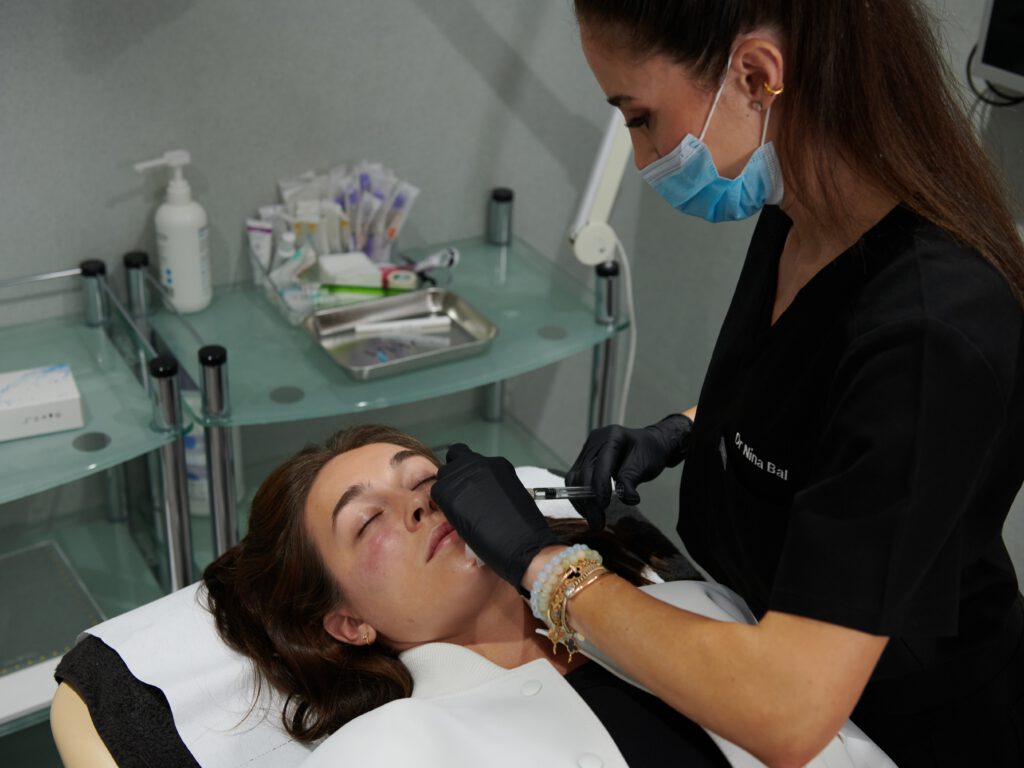
A regenerative injectable skin booster that works with your skin’s own repair processes to improve quality, hydration and elasticity — delivered as a short course by Dr Nina Bal at Facial Sculpting in South Kensington, for fresher, more resilient skin and a smoother under-eye area that builds gradually over the weeks following treatment.
- Treatment
- Minimally invasive regenerative injectable
- Best for
- Skin quality, under-eyes, fine lines & repair
- Downtime
- Minimal — small bruises or bumps may occur
- Sessions
- Usually a course of 3, 2–4 weeks apart
- Results build
- Often within ~1 month · improve over months
- From
- £690 per area — consultation first
★★★★★ 5.0 on Google
Save Face Platinum accredited
As seen in








Treatment summary
Polynucleotides at a glance
Polynucleotides are a regenerative skin-booster injectable derived from purified natural sources, used to support the skin’s own repair and renewal. They are designed to improve skin quality, hydration, elasticity and texture — including the delicate under-eye area — over a short course. They are not a dermal filler and do not add volume or contour the face; results develop gradually and vary from person to person.
- What it treats
- Tired, crêpey or dehydrated skin, fine lines, under-eye laxity & dark shadowing
- How it works
- Regenerative polynucleotides support fibroblasts, collagen & tissue repair
- Areas
- Face, under-eyes, neck and other areas of poor skin quality
- Anaesthetic
- Usually none; numbing cream may be used for delicate areas
- Sessions
- Typically a course of 3, around 2–4 weeks apart
- Downtime
- Minimal; small bruises, redness or injection-point bumps may occur
- Results & longevity
- Build over weeks to months; a maintenance plan is advised
- Performed by
- Dr Nina Bal & the Facial Sculpting team
- Price
- From £690 per area — confirmed at consultation
The treatment
What are polynucleotides?
Polynucleotides are a regenerative skin-booster injectable made from purified, naturally derived polynucleotide fragments. Rather than adding volume like a dermal filler, they work with your skin: they help to hydrate the tissue, support the activity of fibroblasts (the cells that make collagen and elastin) and create a healthier environment for the skin to repair itself. The result, over a short course, is skin that looks fresher, feels firmer and shows better tone and texture.
Because they are gentle and well tolerated, polynucleotides are particularly popular for the delicate under-eye area, where they can help soften fine lines, improve crêpey skin and reduce the look of dark, tired shadows by improving skin quality. They are also used across the face and neck wherever the priority is skin health rather than reshaping. Results are not instant — they build naturally as the skin responds, which is why a course of treatments is recommended.
Polynucleotides sit within our family of injectable skin boosters and bio-remodelling treatments alongside Profhilo® and our wider facial sculpting treatments. They are often combined with other treatments as part of a wider plan — and the honest limitations below explain where another route may suit you better.
Concerns it can help
What do polynucleotides address?
Polynucleotides are designed to improve skin quality and support repair — not to add volume or reshape the face.
Honest suitability
Are polynucleotides right for you?
Polynucleotides are not for everyone — and we will tell you if they are not the best option for you. Final suitability is always confirmed at consultation.
Often well suited
- Tired, dull or dehydrated skin that needs renewal
- Crêpey skin and fine lines around the eyes
- Dark, tired-looking under-eyes from poor skin quality
- Early loss of firmness and elasticity in the skin
- Wanting to improve skin health rather than add volume
- Happy to follow a short course for the best result
May not be suitable
- Wanting instant volume or facial contouring (filler may suit better)
- Known allergy to the product or its constituents
- Pregnancy or breastfeeding (subject to clinic policy)
- Active infection, inflammation or skin condition in the area
- Certain medical or autoimmune conditions identified at consultation
- Expecting a single-session, dramatic transformation
The process
How polynucleotides work, step by step
- Consultation & assessmentDr Nina or the team assess your skin, medical history and goals, and confirm whether polynucleotides are suitable or whether another skin booster or treatment is more appropriate.
- PreparationThe area is cleansed and, for delicate sites such as the under-eyes, a numbing cream may be applied for your comfort.
- Precise injectionsSmall amounts of the polynucleotide solution are injected into the target area using a fine needle or cannula, with care taken around the eyes.
- Your coursePolynucleotides are delivered as a short course — usually three sessions around 2–4 weeks apart — so skin quality can build over time.
- Aftercare & reviewYou receive tailored aftercare advice, and your progress can be reviewed as results develop, with a maintenance plan discussed where appropriate.
“A less-is-more philosophy: regenerative skin boosters only when they’re genuinely right for you — for healthier skin that still looks like you.”
The Facial Sculpting approach · Dr Nina BalBefore treatment
What happens at your consultation
A consultation is recommended before polynucleotide treatment. During your initial consultation with Dr Nina and her team you will have a clinical skin assessment and your suitability reviewed. You will be talked through the procedure in detail — what to expect during and after — and given the opportunity to ask questions.
The consultation covers your medical history, a skin assessment, your suitability and any contraindications, realistic expected outcomes, alternatives if polynucleotides are not ideal, aftercare, and confirmation of your individual plan and price.
Results & recovery
What to expect afterwards
Polynucleotides involve minimal downtime. Because the injections are small, most people return to normal activities quickly. Temporary redness, mild swelling, small bruises or tiny injection-point bumps may occur — particularly around the delicate under-eye area — and usually settle within a few days. You receive aftercare guidance tailored to your treatment.
Results & longevity: many patients notice an improvement in hydration, texture and elasticity within about a month, with fine lines continuing to soften over the following months as the skin responds. Results are not permanent; a maintenance plan is usually advised. Outcomes vary with skin quality, age and lifestyle.
Typical results timeline
First days
Any redness, swelling, small bruises or injection-point bumps begin to settle.
~1 month
Many patients notice improved hydration, texture and a fresher look.
Over the course
Skin quality builds session by session as repair processes are supported.
Following months
Fine lines and elasticity continue to improve; maintenance is then discussed.
Safety
Possible risks & side effects
As with any injectable treatment, polynucleotides carry some risks. Possible side effects may include temporary redness, swelling, tenderness, small bruises or tiny lumps at the injection points, and these usually resolve within days. Less common effects are discussed individually at consultation, and patch testing or precautions are considered where appropriate.
Careful patient selection, an accurate plan and an experienced practitioner are important for a safe, natural result — especially around the eyes. If anything is unexpected after treatment, you can contact the clinic for advice.
Honest limitations
What Polynucleotides cannot do
- They are not a dermal filler — they do not add volume or contour the face.
- They cannot lift significant skin laxity or replace surgery.
- They do not deliver instant change — results build over a course.
- They are not a substitute for sun protection and good skincare.
Compare your options
Polynucleotides vs other approaches
A simple, honest comparison of the injectable skin boosters to help you and Dr Nina choose the right route.
| Approach | Best for | Invasiveness | Downtime |
|---|---|---|---|
| Polynucleotides | Regeneration, skin quality & under-eyes | Minimally invasive injectable | Minimal |
| Profhilo® | Hydration, firmness & bio-remodelling | Minimally invasive injectable | Minimal |
| Profhilo® Structura | Firmness & structural support | Minimally invasive injectable | Minimal |
| Jalupro HMW | Skin density, hydration & elasticity | Minimally invasive injectable | Minimal |
| Jalupro Young Eyes | Fine lines & dark circles under the eyes | Minimally invasive injectable | Minimal |
| Tear Trough Rejuvenation | Hollowing & shadows under the eyes (filler) | Minimally invasive injectable | Minimal |
Polynucleotides are often planned alongside Profhilo® for hydration and firmness, or sequenced with under-eye options such as Jalupro Young Eyes — the right plan is discussed honestly at consultation.
Transparent pricing
How much do polynucleotides cost?
Prices start from £690 per area — your exact plan and number of sessions are confirmed after consultation.
Polynucleotides (Per Area)
From£690
Single session targeting one area of poor skin quality — usually part of a course of three.
Book this planPolynucleotides (Face)
From£690
Single session treating the face to improve overall skin quality and texture, usually as a course.
Book this planPolynucleotides (Under Eyes)
From£690
Single session for the delicate under-eye area to soften fine lines and improve tired-looking skin, usually as a course.
Book this planThe exact price depends on your individual plan, which is confirmed after your consultation. View the full price list.
Why Facial Sculpting
Polynucleotides at the Facial Sculpting Clinic
Doctor-led & honest
Assessment first. If polynucleotides aren’t right for you, we’ll say so and recommend a safer or better option.
Tailored to you
A bespoke plan for your skin, your concern and your goals — never one-size-fits-all.
Gentle & regenerative
A minimally invasive treatment that supports your skin’s own repair, with minimal downtime.

Dr Nina Bal
Cosmetic Doctor & Founder · South Kensington, London
Patients choose Facial Sculpting for polynucleotides because the focus is on careful assessment, natural-looking skin quality and honest advice — not over-treating. Dr Nina and her clinical team are experienced with the delicate under-eye area and plan polynucleotide courses around your goals, combining them thoughtfully with treatments such as Profhilo®, Jalupro Young Eyes or tear trough rejuvenation where appropriate.
GDC registeredBCAM memberSave Face PlatinumJCCP
GHP Best Facial Transformation Clinic London 2025Endolift UK Achievement Award 2025Safety in Beauty Best Aesthetic DoctorSafety in Beauty Best Non-Surgical TransformationGHP Best Non-Surgical Aesthetics Studio 2024Aesthetics Awards Finalist 2024Save Face Platinum
Accreditations & recognition
 Save Face Platinum accredited
 Registered with the General Dental Council
 British College of Aesthetic Medicine member
 Save Face COVID-19 Operational Protocol Certified
 ICO — Information Commissioner's Office
 JCCP — Joint Council for Cosmetic Practitioners
 Featured in the Tatler Address Book
 Hello! Aesthetics Guide
 Safety in Beauty member
Trusted by patients
What our patients say about Facial Sculpting Clinic
Real reviews from patients who chose Dr Nina Bal and the Facial Sculpting team.
5.0
★★★★★
Rated 5.0 by patients on Google
via Google
R
Rebecca B.Patient review
★★★★★
Dr Nina’s expertise speaks for itself and I’m thrilled with the results from botox- it’s very subtle and natural, whilst achieving the lift and smoothness I was after. Dr Nina takes the time to listen to your goals and concerns, and is also helping with my skin care. Highly recommend!
Verified patient
R
Rebecca H.Patient review
★★★★★
If I could leave more than five stars I would! Dr Nina’s clinic is warm and welcoming, in a beautiful location close to Knightsbridge station. I had cheek fillers for the first time and my face was numbed prior. I was expecting to find it a little uncomfortable but honestly there was barely any pain at all. The needles are so fine, and Dr Nina was very gentle. I will be back as I know I am in good hands!
Verified patient
J
Jessica C.Patient review
★★★★★
Beautiful clinic and brilliant treatments available. Dr Nina is very talented and lovely to deal with!
Verified patient
M
Milli P.Patient review
★★★★★
I first went to see Dr Nina for Bruxism. Having already faced fillings from the grinding, and wearing a mouth guard every night, I was still regularly getting migraines and ice pick headaches, exacerbated from the daily tension in my jaw. My temples were always tender, and I’d wake up every morning tense and sore. This has been such a life-changing procedure, and now I start the day from a place of much greater relaxation, I’m able to deal with the stress of work and every day life with far more ease, I’m sleeping better, and if I wake in the night, I’m still amazed and grateful to find that my jaw is relaxed. I’m looking forward to trusting Dr. Nina with further treatments! Thanks Dr Nina!
Verified patient
R
Ravi K.Patient review
★★★★★
I have been with Dr Nina Bal for many years for facial injectables. After visiting several Botox doctors in London, I have to say Nina has and is the best doctor thus far. The results from her treatments have been phenomenal. From beginning to end, be assured Nina will listen to your needs and you will achieve results above and beyond. Thank you so much Nina and I look forward to having all my treatments with you. From an extremely happy customer. You have changed my confidence for the better forever.
Verified patient
Your questions
Polynucleotides FAQs
What are polynucleotides?
Polynucleotides are a regenerative skin-booster injectable made from purified, naturally derived polynucleotide fragments. Rather than adding volume like a filler, they hydrate the skin and support the cells responsible for collagen and tissue repair, helping to improve skin quality over a short course.
What skin concerns can polynucleotides treat?
They are used to improve skin quality, hydration, texture and elasticity — including tired, dull or crêpey skin, fine lines, and the delicate under-eye area where they can soften lines and improve dark, tired-looking shadows. They are best for skin health rather than reshaping or volumising.
Are polynucleotides the same as a dermal filler?
No. Dermal fillers add volume and contour the face, whereas polynucleotides are a regenerative booster that works with your skin to improve its quality and support repair. They do not add volume, which is why they are often chosen for the under-eyes and overall skin health.
How are polynucleotides different from Profhilo®?
Both are minimally invasive injectable skin boosters with minimal downtime, but they work differently. Profhilo® is a hyaluronic-acid bio-remodelling treatment focused on hydration and firmness, while polynucleotides are regenerative and focus on supporting the skin’s repair and renewal. Dr Nina will advise which suits your skin, and they are sometimes combined.
How many polynucleotide sessions will I need?
A course of around three sessions, spaced roughly 2–4 weeks apart, is usually recommended for the best result, with maintenance over time. The exact number depends on your skin and goals and is confirmed at consultation.
Are polynucleotides good for under-eyes?
Yes — the under-eye area is one of the most popular uses. Because polynucleotides improve skin quality without adding volume, they can help soften fine lines, improve crêpey skin and reduce the look of tired, dark shadows. They are sometimes paired with under-eye options such as Jalupro Young Eyes or tear trough rejuvenation.
Do polynucleotides help with dark circles?
They can help where dark circles are related to poor skin quality, thin or crêpey under-eye skin and a tired appearance, by improving the health and texture of the skin. Where dark circles are caused mainly by hollowing or shadowing, a filler-based option such as tear trough rejuvenation may be more appropriate — this is assessed at consultation.
Is the treatment painful?
Most people find polynucleotide injections very tolerable. The needle is fine, and for delicate areas such as the under-eyes a numbing cream may be applied for your comfort. Any tenderness afterwards is usually mild and short-lived.
Is there any downtime?
Downtime is minimal and most people return to normal activities quickly. Temporary redness, mild swelling, small bruises or tiny injection-point bumps may occur — especially around the eyes — and usually settle within a few days. You receive aftercare advice tailored to your treatment.
When will I see results from polynucleotides?
Many patients notice improved hydration, texture and a fresher look within about a month, with fine lines and elasticity continuing to improve over the following months as the skin responds. Results build gradually rather than instantly, and individual results vary.
How long do polynucleotide results last?
Results are not permanent. By improving skin quality they can be maintained over time with a sensible maintenance plan — typically a top-up session every few months. Longevity varies with your skin, age and lifestyle; Dr Nina will advise on maintenance.
Can polynucleotides be combined with other treatments?
Yes. Polynucleotides are often planned alongside other treatments — for example Profhilo® for hydration and firmness, Jalupro skin boosters, or tear trough rejuvenation for the under-eyes — as part of a wider plan. Dr Nina will advise on what is appropriate to combine and in what order.
Are polynucleotides safe?
Polynucleotides are a well-tolerated, minimally invasive injectable when performed by a trained practitioner after proper assessment. As with any injectable, possible side effects (such as redness, swelling, small bruises or lumps) are discussed in full at consultation, and Dr Nina will only proceed where she believes the treatment is appropriate for you.
Who is not suitable for polynucleotides?
They may not be appropriate during pregnancy or breastfeeding, with a known allergy to the product, active infection or skin conditions in the area, or certain medical or autoimmune conditions. They are also not the right choice if you want instant volume or contouring. Suitability is always confirmed at consultation.
How much do polynucleotides cost in London?
Polynucleotides at Facial Sculpting start from £690 per area, whether for the face, the under-eyes or another area, and are usually delivered as a course of around three sessions. Your exact plan and price are confirmed at consultation.
Is a consultation required before polynucleotides?
A consultation is recommended to assess your skin, medical history and goals, confirm whether polynucleotides are suitable (or whether another skin booster or treatment is better), and agree your individual plan and price.
Take the next step
Book your Polynucleotides consultation
If you are considering Polynucleotides, a consultation is the safest way to confirm whether it is right for your skin, anatomy and goals — and to receive an honest recommendation and exact pricing.
Medical disclaimer: This page is for general information about a non-surgical aesthetic treatment and is not medical advice. Suitability, benefits, risks and results vary from patient to patient. Dr Nina Bal and her team will assess whether Polynucleotides is appropriate for you during a consultation. Before-and-after photographs are of individual patients for illustration only and are not a guarantee of any specific outcome.